
Facing healthcare fraud allegations in Washington, DC? Our specialized healthcare fraud defense team builds unique legal strategies tailored to your specific case.
Contact our experienced healthcare fraud lawyer today for immediate protection of your rights, reputation, and freedom.
Call 1 (866) 601-5518 for a confidential consultation with our Washington DC healthcare fraud defense attorneys.
Why You Need an Experienced Healthcare Fraud Defense Attorney in Washington DC
When federal investigators target your medical practice, healthcare facility, or professional license with fraud allegations, every decision you make in the coming days and weeks will impact your future. As a healthcare professional in the Washington DC area, you understand the complexity of medical billing, compliance requirements, and the intricate web of federal healthcare regulations. What you may not realize is how quickly a routine audit can escalate into a criminal investigation that threatens everything you’ve worked to build.

Speak to Theodore Watson (U.S. Supreme Court Admitted Attorney.) Our National Lead Attorney: Top healthcare Medicare fraud lawyer for small businesses and large corporations in Washington DC and nationwide. He oversees False Claims Act Medicare fraud defense attorneys and qui tam defense lawyers across the United States.
Our national healthcare fraud lawyer team has developed a unique approach to defending healthcare professionals and organizations against both civil and criminal allegations across the country.
Unlike general criminal defense attorneys, our Washington DC healthcare fraud defense specialists understand the nuanced intersection of medical practice, federal regulations, and criminal law.
We don’t just defend cases – we build comprehensive defense strategies that address the specific challenges facing healthcare providers in today’s enforcement environment.
The federal government’s efforts to combat healthcare fraud have intensified dramatically in recent years. The Department of Justice (DOJ) and the Health and Human Services Office of Inspector General (HHS-OIG) have dedicated unprecedented resources to investigating and prosecuting healthcare fraud cases. In fiscal year 2024, settlements and judgments under the False Claims Act exceeded $2.9 billion, with healthcare-related cases accounting for the majority of these recoveries. This aggressive enforcement climate means that healthcare providers face greater scrutiny than ever before.
Investigations: When you’re facing a healthcare fraud investigation, the prosecution has likely been building their case for months or even years before you become aware of their interest in your practice. They have teams of investigators, forensic accountants, and prosecutors working to establish a pattern of fraudulent conduct. The only way to level the playing field is to engage experienced Washington DC healthcare fraud defense counsel who can immediately begin protecting your interests and building your defense strategy. We help with
- bribery,
- kickbacks,
- Wire fraud
- Mail fraud
- Conspiracy
- Billing for services not provided
- gratuities, and
- conflicts of interest
Understanding Healthcare Fraud Charges Under Federal Law
18 USC § 1347: Healthcare fraud prosecutions typically proceed under 18 USC § 1347, the federal healthcare fraud statute, which criminalizes knowingly and willfully executing a scheme to defraud any healthcare benefit program. This statute carries severe penalties, including up to 10 years in federal prison for each count, up to 20 years if the fraud results in serious bodily injury, and a potential life sentence if the fraudulent conduct results in death.
Proof needed: The government’s burden of proof in healthcare fraud cases requires it to establish several key elements beyond a reasonable doubt.
First, they must prove that you knowingly and willfully participated in a scheme to defraud a healthcare benefit program. The “knowingly and willfully” standard is crucial to your defense because it requires the prosecution to demonstrate specific intent to defraud, not merely negligent billing practices or administrative errors.
Second, the prosecution must establish that you made false or fraudulent representations in connection with the delivery of healthcare services. This element often becomes the focal point of healthcare fraud defense strategies because many billing disputes arise from legitimate disagreements about medical necessity, appropriate coding, or documentation requirements rather than intentional fraud.
Third, the government must prove that the false representations were material to the healthcare benefit program’s decision to pay claims. This materiality requirement provides another avenue for healthcare fraud defense because not every billing error or documentation deficiency rises to the level of material fraud that would influence payment decisions.
The prosecution’s burden of proof in healthcare fraud cases is intentionally high because Congress recognized the serious consequences of criminal fraud convictions for healthcare professionals. However, federal prosecutors often attempt to use circumstantial evidence and statistical analysis to establish patterns of fraudulent conduct, making it essential to have healthcare fraud defense lawyers who can effectively challenge these methodologies and present alternative explanations for billing patterns.
Medicare Fraud Defense: Protecting Your Practice in Washington DC
 Federal Medicare fraud allegations in Washington DC represent some of the most serious challenges facing healthcare providers today.
The Medicare program’s complex billing requirements, frequent regulatory changes, and sophisticated audit procedures create numerous opportunities for billing disputes to escalate into fraud investigations. Our medicare fraud defense law firm understands that most billing irregularities result from administrative errors, staff training issues, or legitimate disagreements about coverage policies rather than intentional fraud.
Medicare fraud defense in Washington DC requires specialized knowledge of the Medicare program’s billing requirements, coverage determinations, and audit procedures. The Centers for Medicare & Medicaid Services (CMS) employs multiple layers of oversight, including Recovery Audit Contractors (RACs), Zone Program Integrity Contractors (ZPICs), and Unified Program Integrity Contractors (UPICs), each with different audit methodologies and enforcement priorities.
When Medicare auditors identify billing patterns they consider suspicious, they often refer cases to the HHS-OIG for criminal investigation. These referrals can quickly escalate into full-scale federal criminal investigations involving search warrants, grand jury subpoenas, and potential indictments. Our medicare fraud lawyer team intervenes early in this process to protect your rights and work toward resolution before criminal charges are filed.
The key to effective medicare fraud defense lies in understanding the prosecution’s burden of proof and the specific intent requirements for criminal fraud charges. Medicare billing errors, even systematic ones, do not automatically constitute criminal fraud.
The government must prove that you knowingly submitted false claims with the specific intent to defraud the Medicare program. This distinction is crucial because it allows our medicare fraud defense attorneys to present evidence of good faith efforts to comply with Medicare requirements, staff training programs, and reliance on professional billing services or consultants.
False Claims Act Healthcare Fraud: Civil and Criminal Implications
What CEOs Need to Know
False Claims Act healthcare fraud cases in Washington, DC present unique challenges because they can proceed simultaneously on both civil and criminal tracks. The False Claims Act (31 USC §§ 3729-3733) imposes civil liability for knowingly presenting false claims to the government, while criminal healthcare fraud charges under 18 USC § 1347 can result in federal prison sentences. Understanding the relationship between these parallel proceedings is essential for developing an effective defense strategy.
Civil False Claims Act cases in Washington DC typically begin with either government investigations or qui tam lawsuits filed by whistleblowers. These cases can result in treble damages plus civil penalties of up to $23,331 per false claim under current penalty guidelines. For healthcare providers with high claim volumes, False Claims Act liability can quickly reach millions of dollars, making early intervention and strategic defense planning crucial.
The government’s burden of proof in False Claims Act healthcare fraud cases requires them to establish that you knowingly presented false claims for payment. The “knowingly” standard under the False Claims Act includes actual knowledge, deliberate ignorance, or reckless disregard for the truth or falsity of the information. This standard is broader than the specific intent requirement for criminal fraud charges, but it still provides opportunities for effective defense strategies.
Our Washington, DC False Claims Act healthcare fraud defense team focuses on challenging the government’s ability to prove the “knowingly” element by demonstrating good faith compliance efforts, reliance on professional advice, and the complexity of healthcare billing requirements. We also work to establish that any billing errors resulted from legitimate disagreements about coverage policies or documentation requirements rather than intentional false statements.
The intersection of civil and criminal False Claims Act healthcare fraud proceedings requires careful coordination of defense strategies. Statements made in civil proceedings can potentially be used in criminal cases, making it essential to have experienced counsel who can navigate both tracks simultaneously while protecting your interests in each forum.
Washington DC Federal Criminal Defense Attorneys: Focused Healthcare Fraud Representation
Healthcare fraud cases fall within the category of federal white collar crimes, requiring specialized knowledge of federal criminal procedure, healthcare regulations, and the unique challenges facing Washington DC healthcare professionals in the criminal justice system. Our District of Columbia federal criminal defense attorneys have developed extensive teams nationwide to help healthcare providers, administrators, and organizations in complex federal investigations and prosecutions.
Federal criminal defense in healthcare fraud cases in Washington DC begins long before formal charges are filed. The investigation phase often spans months or years, during which federal agents gather evidence through subpoenas, search warrants, and witness interviews. Our federal criminal defense attorneys work to identify and address potential issues during this critical pre-indictment phase, when strategic intervention can often prevent criminal charges from being filed.
The federal criminal justice system operates under different rules and procedures than state courts, with federal prosecutors wielding significant resources and broad investigative powers. Federal criminal defense attorneys must understand the Federal Rules of Criminal Procedure, federal sentencing guidelines, and the specific statutes governing healthcare fraud prosecutions. This specialized knowledge is essential for developing effective defense strategies and protecting your rights throughout the federal criminal process.
Our team of Washington DC federal criminal defense attorneys includes former government and large firm attorneys who understand the government’s investigation and prosecution strategies from the inside. This experience provides valuable insights into how federal prosecutors build healthcare fraud cases and the most effective approaches for challenging their evidence and legal theories.
Washington White collar crime lawyers specializing in healthcare fraud defense must also understand the regulatory environment in which healthcare providers operate. Healthcare fraud cases often involve complex questions about medical necessity, appropriate coding practices, and compliance with ever-changing federal regulations. Our Washington DC white collar crime healthcare fraud defense lawyers work closely with healthcare compliance experts and medical professionals to ensure that our defense strategies address both the legal and regulatory aspects of your case.
Healthcare Fraud Civil Investigative Demands (CIDs): Help Responding to Them
A Civil Investigative Demand (CID) is often the first indication that your healthcare practice or organization is under federal investigation for potential False Claims Act violations. OIG or DOJ CIDs are powerful investigative tools that allow the Department of Justice to compel the production of documents, written responses to interrogatories, and oral testimony under oath.
If you are under investigation for healthcare fraud, please watch this video.
How you respond to a civil investigative demand can significantly impact the trajectory of the government’s investigation and your potential exposure to civil and criminal liability.
Receiving a CID requires immediate attention from experienced healthcare fraud defense counsel. The CID will typically demand extensive documentation, including billing records, patient files, compliance policies, and internal communications. The scope of these demands can be overwhelming, and the deadlines for response are often tight. Our Washington DC False Claims Act healthcare fraud defense team has extensive experience responding to CIDs and can help you navigate this critical phase of the investigation.
The first step in responding to a civil investigative demand CID is conducting a thorough privilege review to identify and protect attorney-client communications, work product materials, and other privileged information. Federal investigators often cast a wide net in their document requests, and it’s essential to ensure that privileged materials are properly identified and protected from disclosure.
Top Washington DC Civil Investigative Demand Lawyers
Our Washington DC healthcare fraud lawyer team also works to narrow the scope of CID demands where appropriate, challenging overly broad or burdensome requests that exceed the government’s investigative authority. We negotiate with federal prosecutors to establish reasonable production schedules and formats that minimize the disruption to your practice while ensuring compliance with the CID’s requirements.
The information you provide in response to a CID will form the foundation of the government’s case against you. Every document produced and every statement made in response to CID interrogatories can potentially be used as evidence in subsequent civil or criminal proceedings. This makes it essential to have experienced healthcare fraud defense counsel guiding your response strategy from the outset.
Give our District of Columbia CID lawyers a call today at 1.866.601.5518 and speak to Theodore Watson
Federal Healthcare Fraud Penalties: Understanding the Stakes in Washington DC
 The penalties for healthcare fraud convictions are severe and can include both criminal sanctions and civil monetary penalties. Understanding the full scope of potential consequences is essential for making informed decisions about your defense strategy and evaluating potential resolution options.
Criminal Penalties
Criminal penalties under 18 USC § 1347 include up to 10 years in federal prison for each count of healthcare fraud. If the fraudulent conduct results in serious bodily injury to a patient, the maximum sentence increases to 20 years per count. In cases where the fraud results in a patient’s death, defendants can face life imprisonment. These sentences run consecutively for multiple counts, meaning that healthcare fraud convictions can result in decades of federal imprisonment.
In addition to imprisonment, criminal healthcare fraud convictions carry substantial financial penalties. Federal courts can impose fines up to $250,000 per count for individual defendants and up to $500,000 per count for organizational defendants. Courts also have the authority to order restitution to compensate healthcare programs for fraudulent payments, which can amount to millions of dollars in cases involving high claim volumes.
Civil Penalties
Civil penalties under the False Claims Act can be equally devastating. The current penalty structure allows for treble damages (three times the amount of fraudulent payments) plus civil penalties of up to $23,331 per false claim. For healthcare providers who submit thousands of claims annually, False Claims Act liability can quickly reach tens of millions of dollars.
Beyond monetary penalties, healthcare fraud convictions carry collateral consequences that can end your career in healthcare. Convicted healthcare providers in Washington DC face mandatory exclusion from federal healthcare programs, including Medicare and Medicaid. This exclusion typically lasts a minimum of five years but can be permanent for certain offenses. Healthcare professionals also face potential loss of professional licenses, which can make it impossible to continue practicing medicine, nursing, or other healthcare professions.
The prosecution’s burden of proof in establishing these severe penalties requires them to prove each element of the healthcare fraud charges beyond a reasonable doubt. Our healthcare fraud defense team focuses on challenging the government’s ability to meet this burden, particularly with respect to the specific intent requirements for criminal fraud charges.
Our National Team Leads for CID and Subpoena Investigations
Criminal Investigative Demand Defense – National Team Leads
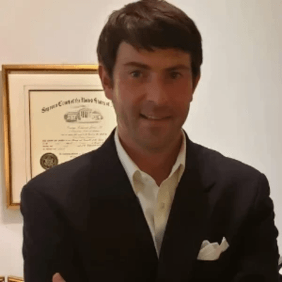 James M. Allen, Of Counsel to Watson & Associates, LLC, is a committed federal white collar criminal defense attorney with experience handling a range of complex matters at the trial and post-conviction levels.
His background includes defending clients in both state and federal forums, with a growing emphasis on federal white collar criminal defense and civil investigative demands.
As a white collar crime attorney, he maintains a strong professional interest in matters involving procurement fraud, SBA investigations, and regulatory enforcement and is well-versed in the legal frameworks and defense strategies that shape those cases. James brings a measured, thoughtful approach to every case, prioritizing clarity, strategic planning, and strong client communication.
 Robert “Bob” Ayers, Of Counsel. With over 20 years of experience, Robert “Bob” Ayers is a trusted advisor in high-stakes federal cases, representing corporate executives, public officials, and in‑house counsel in matters such as fraud, bribery, obstruction of justice, and other financial and regulatory offenses.
Known for his clear, grounded, and personable approach, he guides clients through every stage—from quiet internal investigations, responding to civil investigative demands, to trial preparation—bringing discretion, focus, and a steady hand as federal white collar crime lawyer. His practice is further strengthened by strategic collaborations with former prosecutors, forensic experts, and regulatory specialists. Read more
 Wise D. Allen, Esquire , Counsel, is a former Veteran Lieutenant Commander Judge Advocate for the United States Military. He also has extensive knowledge and experience in resolving civil investigative demands and litigation in vast international and national legal issues.
He brings a wealth of successful experience to government contractors seeking defense counsel in the various areas of procurement fraud, international contracting, False Claims Act defense, and more.
Mr. Allen’s federal litigation experience as a former appellate attorney representing the United States and federal attorney for defendants in trials that led to his clients receiving overwhelmingly favorable outcomes in contested issues and obtaining non-contested resolutions. Read more..
For a FREE Initial Consultation, Call 1.866.601.6618 and Speak to Mr. Watson
The Government’s Investigation Process: What to Expect
Federal Healthcare fraud investigations in Washington DC typically follow a predictable pattern, beginning with initial data analysis and escalating through various stages of investigation before culminating in potential civil or criminal charges. Understanding this process can help you make informed decisions about when to engage counsel and how to protect your interests throughout the investigation.
Most Washington DC healthcare fraud investigations begin with data mining and statistical analysis conducted by government contractors or agency personnel. Medicare and Medicaid claims data is routinely analyzed for unusual billing patterns, outlier providers, and other indicators of potential fraud. When these analyses identify suspicious patterns, they often trigger more detailed reviews and potential referrals for investigation.
The initial investigation phase typically involves document requests and subpoenas for billing records, patient files, and other relevant materials. Government investigators may also conduct interviews with current and former employees, patients, and other individuals with knowledge of your billing practices. During this phase, you may not be aware that you’re under investigation, as the government often gathers information through third parties.
As the investigation progresses, you may receive formal document requests, such as Civil Investigative Demands or grand jury subpoenas. These formal demands signal that the investigation has escalated and that the government is actively building a case. This is typically when healthcare providers first become aware that they’re under federal investigation.
The investigation may also include search warrants executed at your practice or business premises. Search warrants represent a significant escalation in the investigation and often indicate that the government believes it has probable cause to believe that evidence of criminal activity will be found at the searched location. The execution of search warrants is often followed by attempts to interview targets of the investigation
Throughout this process, the government’s burden of proof requires them to develop evidence supporting each element of potential healthcare fraud charges. Our healthcare fraud defense team works to understand the government’s theory of the case and identify weaknesses in their evidence and legal arguments. Early intervention in the investigation process can often lead to more favorable outcomes and may prevent criminal charges from being filed.
Building Your Legal Defense: Challenging the Prosecution’s Case
Effective healthcare fraud defense requires a comprehensive understanding of both the legal elements of fraud charges and the practical realities of healthcare billing and compliance. Our Washington DC Medicare and healthcare fraud lawyer team develops defense strategies that address the specific facts of your case while challenging the government’s ability to prove the essential elements of healthcare fraud beyond a reasonable doubt.
The prosecution’s burden of proof in healthcare fraud cases centers on establishing specific intent to defraud healthcare programs. This intent requirement provides the foundation for most successful healthcare fraud defense strategies. Many billing irregularities that appear suspicious to government investigators actually result from legitimate business practices, administrative errors, or good faith disagreements about coverage policies and billing requirements.
We Build a Team Unique to You Case
Our healthcare fraud defense team conducts thorough investigations of your billing practices, compliance procedures, and staff training programs to identify evidence supporting a good faith defense. We work with national healthcare compliance experts, medical professionals, and billing specialists to develop expert testimony that explains the legitimate reasons for billing patterns that the government characterizes as fraudulent.
Documentation is crucial in federal healthcare fraud defense cases in Washington DC . We review your compliance policies, staff training materials, and internal communications to identify evidence of good faith efforts to comply with healthcare program requirements. We also examine your reliance on professional billing services, consultants, and legal advice to establish that any billing errors resulted from reasonable reliance on professional guidance rather than intentional fraud.
The complexity of healthcare billing requirements often provides opportunities for effective defense strategies. Medicare and Medicaid billing rules are notoriously complex and subject to frequent changes. Our healthcare fraud defense attorneys work to demonstrate that billing errors resulted from the inherent complexity of these requirements rather than intentional attempts to defraud government programs.
Statistical evidence often plays a central role in government healthcare fraud cases. Prosecutors frequently use statistical analysis to establish patterns of allegedly fraudulent billing. Our Washington DC healthcare fraud defense lawyers work with statistical experts to challenge these analyses and present alternative explanations for billing patterns that the government characterizes as evidence of fraud.
Our Unique Team Approach: Tailored Defense Strategies for Your Case
 Unlike law firms that take a one-size-fits-all approach to healthcare fraud defense, we develop a unique team that is specifically tailored to the facts and circumstances of your case.
Every healthcare fraud investigation presents distinct challenges based on the type of practice involved, the specific allegations, the government agencies conducting the investigation, and the regulatory environment in which you operate.
When you engage our healthcare fraud defense services, we begin by assembling a multidisciplinary team that includes attorneys with specific experience in your area of healthcare practice. Our legal team may include former federal prosecutors who understand the government’s investigation and prosecution strategies, healthcare compliance experts who can address regulatory issues, and medical professionals who can provide expert testimony about standard practices in your field.
Overbilling Fraud Defense
For cases involving complex medical billing issues, our healthcare fraud lawyer team includes attorneys with extensive experience in Medicare and Medicaid billing requirements. We work closely with certified coding specialists and healthcare billing experts to ensure that our defense strategies address the technical aspects of medical billing and coding that often form the basis of government fraud allegations.
In cases involving pharmaceutical companies or medical device manufacturers, our healthcare fraud defense team includes attorneys with specific experience in FDA regulations, pharmaceutical marketing practices, and the unique compliance challenges facing these industries. We understand the complex web of federal regulations governing pharmaceutical sales and marketing and can develop defense strategies that address both criminal charges and regulatory violations.
Not a One-Size Fits All Law Firm – Unique Legal Defense Approach
Our approach to healthcare fraud defense in Washington DC also recognizes that every client faces unique personal and professional circumstances. Healthcare professionals have spent years building their practices and reputations, and healthcare fraud allegations can threaten everything they’ve worked to achieve. We work closely with each client to understand their specific goals and concerns, developing defense strategies that protect not only their legal interests but also their professional licenses and reputations.
The national scope of our healthcare fraud defense practice allows us to assemble teams that include the best attorneys and experts for your specific case, regardless of geographic location. We regularly represent clients in healthcare fraud cases throughout the Washington DC area and across the United States, giving us access to a broad network of specialists and resources.
Specific Federal Healthcare Fraud Statutes and Penalties
Healthcare fraud prosecutions can proceed under multiple federal statutes, each with different elements and penalty structures. Understanding the specific charges you face is essential for developing an effective defense strategy and evaluating potential resolution options.
18 USC § 1347
The primary federal healthcare fraud statute, 18 USC § 1347, criminalizes knowingly and willfully executing a scheme to defraud any healthcare benefit program or obtaining money or property owned by a healthcare benefit program by means of false or fraudulent pretenses, representations, or promises. This statute carries penalties of up to 10 years imprisonment for each count, with enhanced penalties of up to 20 years if the fraud results in serious bodily injury and up to life imprisonment if the fraud results in death.
The False Claims Act, 31 USC §§ 3729-3733
The False Claims Act, 31 USC §§ 3729-3733, provides for civil liability for knowingly presenting false claims to the government. While not a criminal statute, False Claims Act violations can result in treble damages plus civil penalties of up to $23,331 per false claim under current penalty guidelines. False Claims Act cases often proceed in parallel with criminal investigations, requiring coordinated defense strategies.
Anti-Kickback Statute, 42 USC § 1320a-7b
The Anti-Kickback Statute, 42 USC § 1320a-7b, criminalizes the knowing and willful payment or receipt of remuneration to induce referrals for services covered by federal healthcare programs. Violations of the Anti-Kickback Statute are felonies punishable by up to 10 years imprisonment and fines of up to $100,000. The statute includes several safe harbors that protect certain business arrangements from prosecution.
The Stark Law, 42 USC § 1395nn
The Stark Law, 42 USC § 1395nn, prohibits physician self-referrals for certain designated health services covered by Medicare and Medicaid. While the Stark Law is a civil statute that does not provide for criminal penalties, violations can result in substantial civil monetary penalties and exclusion from federal healthcare programs.
Mail fraud (18 USC § 1341) and wire fraud (18 USC § 1343) statutes are frequently used in healthcare fraud prosecutions when fraudulent schemes involve the use of mail or electronic communications. These statutes carry penalties of up to 20 years imprisonment and can be used to prosecute healthcare fraud schemes even when the specific healthcare fraud statute doesn’t apply.
Money laundering statutes (18 USC §§ 1956-1957) may also apply in healthcare fraud cases involving the concealment or disguising of fraudulent proceeds. Money laundering charges can significantly increase potential penalties and often carry mandatory minimum sentences.
Various Levels of Proof By Prosecutor
The prosecution’s burden of proof varies depending on the specific statutes charged, but all criminal healthcare fraud charges require proof of specific intent to defraud. Our healthcare fraud defense team carefully analyzes the specific charges in your case to identify the most effective defense strategies and challenge the government’s ability to prove each required element.
Why the Prosecution Often Cannot Meet Their Burden of Proof
Our Goal is to deconstruct the prosecution’s Case
Healthcare fraud cases present unique challenges for federal prosecutors because they must prove specific intent to defraud in an industry characterized by complex regulations, frequent rule changes, and legitimate disagreements about billing practices and medical necessity. The prosecution’s burden of proof in healthcare fraud cases is intentionally high, and experienced healthcare fraud defense counsel can often identify weaknesses in the government’s case that prevent them from meeting this burden.
One of the most significant challenges facing prosecutors in healthcare fraud cases is distinguishing between intentional fraud and legitimate billing errors or disagreements. Healthcare billing involves thousands of complex rules and regulations that are subject to frequent changes and varying interpretations. What appears to be a pattern of fraudulent billing to government investigators may actually reflect good faith efforts to comply with complex and sometimes contradictory requirements.
The prosecution’s burden of proof also requires them to establish that defendants acted with specific intent to defraud healthcare programs. This intent requirement is crucial because it means that negligent billing practices, administrative errors, or even systematic billing mistakes do not constitute criminal fraud unless the government can prove that defendants knew their conduct was fraudulent and intended to defraud government programs.
Lack of Intent Helps Your Case
Healthcare fraud defense attorneys in Washington DC can often challenge the government’s intent evidence by presenting testimony about the complexity of healthcare billing requirements, the defendant’s good faith efforts to comply with regulations, and the legitimate business reasons for billing practices that the government characterizes as fraudulent. Expert testimony from healthcare compliance professionals and medical billing specialists can be particularly effective in demonstrating that billing patterns resulted from legitimate business practices rather than fraudulent intent.
The government’s reliance on statistical evidence in healthcare fraud cases also creates opportunities for effective defense strategies. Prosecutors often use statistical analysis to identify billing patterns that they characterize as evidence of fraud. However, statistical outliers don’t necessarily indicate fraudulent conduct, and experienced healthcare fraud defense counsel can present alternative explanations for unusual billing patterns.
Documentation and compliance efforts can also undermine the government’s ability to prove fraudulent intent. Healthcare providers who maintain comprehensive compliance programs, provide regular staff training, and seek professional advice about billing practices can often demonstrate that any billing errors resulted from good faith efforts to comply with complex requirements rather than intentional fraud.
The prosecution’s burden of proof in healthcare fraud cases also requires them to establish that false statements were material to the government’s decision to pay claims. This materiality requirement provides another avenue for challenging the government’s case, particularly in cases involving technical billing errors or documentation deficiencies that didn’t affect the appropriateness of the underlying medical services.
Protecting Your Professional License and Reputation
Healthcare fraud allegations pose serious threats to your professional license and reputation, even if criminal charges are ultimately dismissed or result in acquittal. State licensing boards often initiate their own disciplinary proceedings based on healthcare fraud allegations, and these proceedings can result in license suspension or revocation regardless of the outcome of criminal cases.
Our Washington DC healthcare fraud defense team understands the critical importance of protecting your professional license and works to coordinate criminal defense strategies with license defense efforts. We maintain relationships with experienced healthcare licensing attorneys throughout the Washington DC area and can ensure that your license defense is properly coordinated with your criminal defense.
Professional licensing proceedings often have different standards of proof and procedural rules than criminal cases. While criminal cases require proof beyond a reasonable doubt, licensing proceedings typically use a preponderance of the evidence standard, making it easier for licensing boards to impose discipline based on the same conduct that forms the basis of criminal charges.
The timing of licensing proceedings can also create strategic challenges. Licensing boards may initiate disciplinary proceedings while criminal cases are still pending, potentially creating conflicts between the need to defend your license and the need to protect your rights in the criminal case. Our healthcare fraud lawyer team works to manage these competing interests and develop strategies that protect both your criminal and licensing interests.
Reputation management is another critical aspect of healthcare fraud defense. Healthcare fraud allegations often generate negative media coverage that can damage your professional reputation even if you’re ultimately vindicated in court. We work with public relations professionals when appropriate to manage media coverage and protect your reputation throughout the legal process.
The collateral consequences of healthcare fraud convictions extend beyond criminal penalties and licensing issues. Healthcare providers who are convicted of fraud-related offenses face mandatory exclusion from federal healthcare programs, which can effectively end their careers in healthcare. Understanding these collateral consequences is essential for making informed decisions about defense strategies and potential plea negotiations.
Contact Our Washington DC Healthcare Fraud Defense Lawyers Today
If you’re facing healthcare fraud allegations or believe you may be under investigation, time is critical. The decisions you make in the coming days and weeks will have lasting consequences for your freedom, your professional license, and your reputation. Don’t face these challenges alone – contact our experienced healthcare fraud defense team today for immediate protection of your rights and interests.
Our DC healthcare fraud lawyer team is available 24/7 to respond to urgent situations, including the execution of search warrants, grand jury subpoenas, and requests for interviews by federal agents. We understand that healthcare fraud investigations often move quickly, and we’re prepared to provide immediate assistance when you need it most.
During your initial consultation, we’ll review the specific facts of your case, explain your legal options, and begin developing a defense strategy tailored to your unique circumstances. We’ll also explain the investigation and prosecution process, help you understand the potential consequences you’re facing, and answer any questions you have about your case.
Our healthcare fraud defense services include representation in all aspects of federal healthcare fraud cases, from initial investigations through trial and appeal if necessary. We also provide guidance on compliance issues, and reputation management to help you protect all aspects of your professional and personal interests.
Don’t let healthcare fraud allegations destroy everything you’ve worked to build. Contact our Washington DC healthcare fraud defense team today to begin protecting your rights, your reputation, and your future. Call us now for a confidential consultation with experienced healthcare fraud defense attorneys who understand the unique challenges facing healthcare professionals in today’s enforcement environment.
Call 1.866.601.5518 now to speak directly with our healthcare fraud lawyer team. Your consultation is completely confidential, and we’re here to help you navigate this challenging time with the skilled legal representation you deserve.