When Federal Investigators Target Your Business: Our Government Contract Fraud Lawyer & Former DOJ Attorneys Provide Immediate Help Nationwide
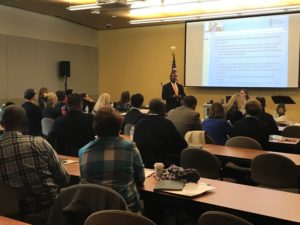
Under investigation for alleged SDVOSB fraud? Here is what you need to know in the first 72 hours.
Watson & Associates, LLC defends service-disabled veteran-owned small business owners, their companies, and the government contractors who team with them in SDVOSB fraud investigations nationwide. Our SDVOSB fraud lawyers include a former federal contracting officer, a former SBA attorney, a retired Air Force procurement official, and a former Assistant U.S. Attorney from a Major Frauds Section. That combination matters because an SDVOSB fraud case is won or lost on two things at once: the SBA control and subcontracting rules and how federal prosecutors build a fraud case.
Call 1-866-601-5518 to speak with our SDVOSB fraud lawyers in confidence, or send us the document you received and its deadline.
What Happened This Week — and Why the Next Few Days Matter
Most clients call us after one of these events:
- A Civil Investigative Demand (CID) arrived from the Department of Justice asking for SDVOSB certification files, operating agreements, teaming agreements, and payroll records.
- An Inspector General subpoena from VA OIG, SBA OIG, or DCIS asked for the same records, or agents interviewed an employee at home.
- A grand jury subpoena or target letter named the company, the veteran owner, or a partner firm.
- A competitor filed an SDVOSB status protest, or SBA VetCert opened a review of eligibility.
- A suspension and debarment official sent a notice or a request for information.
Each of these is a different entry point into the same problem: the government believes a set-aside contract went to a company that was not eligible for it. By the time you learn about an SDVOSB fraud investigation, investigators have usually been working for months. Three things are true today.
No one at your company has to give a statement today. An inaccurate answer given in good faith to a federal agent can become a separate false-statement charge under 18 U.S.C. § 1001.
A civil SDVOSB fraud investigation can also be a criminal one. DOJ often runs civil False Claims Act matters and criminal matters in parallel and shares the record between them. A CID response is never “just paperwork.”
Deadlines are already running. CID return dates, litigation-hold obligations, and the decision whether to open a privileged internal review all need to be handled now.
Who We Represent in SDVOSB Fraud Investigations
Our SDVOSB fraud lawyers represent government contractors and service-disabled veteran companies nationwide, including:
- Veteran-owned business clients and SDVOSB companies facing SDVOSB fraud allegations that they were ineligible for set-aside or sole-source awards.
- Veteran owners, who often need legal counsel separate from the company and from any non-veteran partner.
- Prime contractors, subcontractors, mentors, and joint venture partners accused of using an SDVOSB as a pass-through.
- Officers, managers, and employees who have been contacted by agents or subpoenaed to testify in a government contracting fraud investigation.
Where the interests of the veteran owner, the company, and a partner firm diverge — and in SDVOSB fraud cases they frequently do — that conflict must be identified before anyone gives a statement. In one Iowa prosecution, for example, the government dismissed all charges against the service-disabled veteran while the non-veteran who controlled the company pleaded guilty to major program fraud. The roles people played, and who can prove what, decide outcomes.
What DOJ Prosecutors Look for in an SDVOSB Fraud Case
SDVOSB fraud cases follow recognizable patterns. Inspectors General have described pass-through schemes as the most common form of SDVOSB fraud they investigate. Prosecutors and agents typically look for:
- Figurehead ownership (“rent-a-vet”). The veteran holds 51 percent on paper, but a non-veteran makes the real decisions.
- Lack of day-to-day control. The Small Business Act requires that one or more service-disabled veterans control the management and daily business operations of the concern.
- Pass-through performance. The SDVOSB wins the award, then a large or non-veteran firm performs and manages the work for a fee or percentage.
- Shared everything. Common offices, staff, email domains, bank signatories, bonding, or even the same IP address used to update SAM.gov records — a fact one Interior OIG investigation specifically cited.
- Side agreements. A joint venture or teaming agreement that says one thing, and a separate agreement that says the money and control really belong to the partner. In the San Diego Otero case, a side agreement showing the joint venture existed to use a veteran’s status became central evidence at trial.
- Limitations on subcontracting violations. Under 13 C.F.R. § 125.6, a set-aside prime may not pay more than 50 percent of the amount received to firms that are not similarly situated on services contracts, 85 percent on general construction, and 75 percent on special trade construction.
None of these facts automatically proves SDVOSB fraud. Many have innocent explanations rooted in how small businesses actually start, finance, and staff contracts. The job of experienced SDVOSB fraud lawyers is to know the difference and show it to the government before it makes a charging or intervention decision.
SDVOSB Fraud – Pass-Through Schemes, Teaming Agreements, and SBA Affiliation Rules
This is where most SDVOSB fraud allegations live, where government contract fraud theories are most often overstated, and where firms without procurement experience struggle.
Teaming agreements and joint ventures are legal. A service-disabled veteran-owned small business may partner with larger firms; SBA rules permit SDVOSB joint ventures, mentor-protégé relationships, and subcontracting to similarly situated firms. The question is not whether a partner existed, but whether the veteran kept control and whether the work split complied with the limitations on subcontracting.
Affiliation and control are technical questions. SBA’s affiliation rules, the ostensible subcontractor rule, and negative-control provisions in operating agreements can make a company ineligible even when everyone believed it qualified. A finding of ineligibility in a status protest is not the same as a finding of fraud — but the government will try to use it that way.
Certification history matters. Since January 1, 2024, an SDVOSB generally must be certified by SBA through VetCert to receive set-aside or sole-source awards. What the company disclosed to SBA in that application, and what SBA approved, is often powerful evidence of good faith. Certification is not a shield on its own, so we analyze it carefully rather than overstate it.
Our team includes a former SBA attorney who has worked these eligibility rules from the inside and a former contracting officer who has awarded and administered set-aside contracts. That is why our SDVOSB fraud lawyers can explain to a prosecutor why a structure that looks suspicious on paper was actually common, disclosed, or approved.
The Separate Charges in a Criminal SDVOSB Fraud Case
Prosecutors rarely charge SDVOSB fraud under one statute. They layer counts over the same conduct. The charges our SDVOSB fraud lawyers see most often include:
- 15 U.S.C. § 645(d) — misrepresenting SDVOSB status to obtain a contract: up to 10 years in prison and a fine of up to $500,000, plus suspension, debarment, and program ineligibility.
- 15 U.S.C. § 645(g) — for exceeding the limitations on subcontracting, the fine becomes the greater of $500,000 or the amount paid to subcontractors above the permitted level.
- 18 U.S.C. § 1031 — major fraud against the United States on contracts of $1 million or more.
- 18 U.S.C. §§ 1341 and 1343 — mail and wire fraud, charged for each invoice or electronic submission.
- 18 U.S.C. § 371 — conspiracy, which reaches partners who never signed a certification.
- 18 U.S.C. §§ 287 and 1001 — false claims and false statements, including statements made to investigators.
- Money laundering and forfeiture, which can reach profits from the contracts.
The Otero prosecution in San Diego illustrates the pattern: a conspiracy count, major fraud counts, wire fraud counts, and false-statement counts arising from about $11 million in SDVOSB set-aside work, followed by an 18-month prison sentence and a separate civil resolution.
Nationwide Representation
Federal procurement fraud is federal law, investigated by national agencies — DOJ, DCIS, FBI, GSA OIG, SBA OIG, VA OIG, HHS OIG — and prosecuted in United States District Courts across the country. Our defense contractor fraud representation is national in scope. We appear in federal investigations and proceedings nationwide, coordinating with local counsel where required by local rules. You do not need a government contract fraud lawyer in your zip code; you need one who handles government procurement fraud matters as a primary practice.
The firm maintains fully staffed offices in Denver, Colorado and Washington, D.C., and supports clients across the country from those locations. Wherever your contract was performed and wherever the investigating office sits, the analysis is the same and the response has to begin now.
Civil False Claims Act Exposure for SDVOSB Fraud
Most SDVOSB fraud matters begin as civil False Claims Act investigations, often triggered by a sealed qui tam complaint from a former employee, partner, or competitor. In fiscal year 2025, whistleblowers filed a record 1,297 new qui tam suits, and DOJ identified procurement fraud as a leading enforcement area. Set-aside eligibility cases are now among the most actively pursued forms of government contract fraud.
Civil exposure includes treble damages plus a per-claim penalty that currently runs from $14,308 to $28,619 for each false claim. In set-aside cases, the government also relies on a statutory presumption under 15 U.S.C. § 632(w) that its loss equals the total amount paid on the contract.
That presumption has limits that matter. By its terms, it applies when a business that was not eligible willfully sought and received the award by misrepresentation, and Congress directed SBA to protect contractors from liability for unintentional errors. Whether the government can prove willfulness is often the most important damages question in an SDVOSB fraud case.
The June 2026 settlement in which a contractor and two executives agreed to pay $21.3 million to resolve SDVOSB fraud allegations shows how large civil exposure can become — and why the response to a CID must be managed from day one.
Why SuperValu Supreme Court Decision Gives Contractors a Better Path to a Favorable Result
In United States ex rel. Schutte v. SuperValu Inc. (2023), the Supreme Court unanimously held that False Claims Act scienter turns on the defendant’s own knowledge and subjective beliefs at the time of the claim — not on what an objectively reasonable person might have believed.
SuperValu is often described as a win for whistleblowers, and in one sense it was: a company cannot escape liability by inventing a reasonable reading of the rules after the fact. But for many contractors facing SDVOSB fraud allegations, it shifts the case onto ground that favors a well-prepared defense.
- The case becomes about what your people actually knew and believed. In SDVOSB cases, that means certification applications, SBA and VA communications, contracting officer emails, advice from counsel or advisors, and how the veteran actually ran the company.
- Complex rules cut both ways. SBA control, affiliation, and subcontracting rules are genuinely difficult. Contemporaneous evidence that the company tried to comply, disclosed its structure, and relied on guidance is direct evidence against “knowing” fraud.
- The government must prove it, not assume it. Prosecutors and DOJ trial attorneys must connect specific people to specific knowledge. Investigations built mainly on a relator’s narrative often have gaps in exactly this area.
SuperValu does not make every case winnable, and it does not help a company whose own records show it knew it was ineligible. What it does is reward the defense that gathers and presents the contemporaneous record early — before DOJ makes its intervention or charging decision. That is the work SDVOSB fraud lawyers with both procurement and prosecution experience are built to do.
Where the Government’s SDVOSB Fraud Case Often Has Holes
In the experience of our SDVOSB fraud lawyers, government contract fraud cases built against small businesses frequently contain weaknesses that a procurement-trained defense can expose:
- Treating rule violations as fraud. An ineligibility finding, a subcontracting overrun, or a flawed operating agreement is not automatically a knowing false claim.
- Misreading how the work was performed. Investigators may count dollars, not labor, or misclassify similarly situated subcontractors.
- Ignoring what the government knew. If the agency knew the facts and kept paying, materiality may be contested.
- Overreaching on damages. The total-contract-value presumption depends on willfulness and does not reach unintentional errors.
- Relying on an interested witness. Relators are often former partners or employees with their own financial stake and their own exposure.
Not every investigation ends in charges. In one Interior OIG pass-through investigation, the U.S. Attorney’s Office declined both criminal and civil prosecution — but the companies were still referred for suspension and debarment. That second track has to be defended on its own.
How We Help: From Investigation Through Indictment and Trial
Our SDVOSB fraud lawyers handle every stage of an SDVOSB fraud matter as one strategy rather than handing it between separate civil, criminal, and procurement lawyers.
Investigation phase
We take over communications with agents and DOJ, issue a litigation hold, interview key witnesses under privilege, and build our own command of the facts. Where the record supports it, we present the defense to DOJ before a qui tam intervention decision or a charging decision is made.
Civil Investigative Demands and subpoenas for alleged SDVOSB fraud
A CID under 31 U.S.C. § 3733 can require documents, written answers, and sworn testimony. We negotiate scope and timing, protect privilege, prepare witnesses, and read what the CID reveals about the relator and the government’s theory. We handle IG and grand jury subpoenas with the same discipline, because a careless production in a civil matter can supply a criminal case.
Target letters and indictment
If a criminal case is likely, our former federal prosecutor and procurement team work together to challenge the theory, seek declination or a narrower resolution, and protect individual clients whose interests differ from the company’s.
Trial
If the government charges SDVOSB fraud, we try the case. We cross-examine the government’s procurement assumptions, not just its witnesses, and we explain SBA eligibility rules to a jury in plain terms.
Suspension, debarment, and SBA proceedings
We defend the company’s present responsibility before the suspension and debarment official and handle related SBA status protests, VetCert reviews, and Office of Hearings and Appeals matters, so the business survives while the SDVOSB fraud investigation runs.
How Does the Government Decide to Come After My Company?
This is the first question nearly every executive asks, and the honest answer is that federal procurement fraud cases begin in a small number of predictable ways.
A whistleblower filed a sealed complaint. This is the most common origin. Under 31 U.S.C. § 3730(b), a private relator — usually a current or former employee, a competitor, a subcontractor, or a teaming partner — files a qui tam complaint under seal in federal district court. The complaint is not served on you. You are not told it exists. DOJ investigates while the case remains sealed, sometimes for years, and the seal is routinely extended. In fiscal year 2025, DOJ reported a record 1,297 new qui tam suits filed, with more than $5.3 billion recovered in whistleblower-initiated matters. If you have received a CID, there is a strong likelihood a sealed complaint is behind it.
An audit finding was referred. DCAA, DCMA, or an agency Inspector General identifies something in an incurred cost submission, a forward pricing rate proposal, a labor distribution report, or a closeout audit and refers it. Contracting officers are directed under FAR Part 3 to report suspected violations of federal criminal law involving fraud in connection with an award, and referrals are not discretionary courtesies.
Data analytics flagged your company. Agencies increasingly run pattern analysis across award databases, SAM registrations, and payment records. Repeat sole-source awards, unusual bidding patterns among related entities, common addresses or shared personnel across ostensibly independent small businesses, and rapid post-award subcontracting to a single large firm all generate flags.
A competitor complained. A disappointed offeror who believes a set-aside award went to an ineligible firm may file a size protest, a status protest, or a complaint with SBA OIG — and those can convert into fraud referrals.
Something surfaced in a different case. Investigations expand. A cooperating witness in an unrelated matter mentions your program. A subcontractor under investigation produces your emails.
What none of these have in common is a snap decision. By the time you learn of an investigation, the government has usually spent months or years developing it. That asymmetry is the single most important fact about your situation, and closing it is the first job of a government contract fraud lawyer.
GET YOUR FREE FALSE CLAIMS ACT CHECKLIST – MINIMIZE CRIMINAL EXPOSURE
SDVOSB Fraud Cases & Civil Investigative Demands: Why They Deserve Immediate Attention
A Civil Investigative Demand is a compulsory process issued by the Attorney General under 31 U.S.C. § 3733 during an investigation of potential False Claims Act liability. It can demand documents, written interrogatory responses, and sworn oral testimony. It is issued before any complaint is unsealed, and in most cases its arrival signals that a qui tam action is pending under seal.
Contractors make four recurring mistakes with CIDs.
Treating the deadline as fixed. Scope and timing are negotiable with the DOJ trial attorney, and reasonable extensions are common — but only if requested properly and early, through counsel.
Over-producing. A sweeping production to appear cooperative hands the government material it did not have, may waive privilege, and can open theories the original demand never contemplated.
Under-producing or preserving badly. Automatic email deletion and routine purge schedules become obstruction problems the moment the company is on notice. A litigation hold has to issue immediately.
Missing what the CID reveals. The definitions, the date range, the named custodians, and the contracts identified tell you a great deal about the relator’s identity, the theory of the case, and the government’s view of scope. Read correctly, a CID is the best intelligence you will receive.
Our government contractor fraud attorneys handle CID response as a strategic exercise — negotiating scope, structuring privilege review, preparing witnesses for sworn testimony, and where the facts support it, presenting an affirmative case to DOJ before an intervention decision is made.
If a CID is on your desk, call 1-866-601-5518 before the response date.
What Are the Main Steps After the Government Launches an SDVOSB Fraud Investigation?
Federal contractor fraud investigations follow a recognizable sequence. Knowing where you are in it tells you what to do next.
Stage One: The Covert Phase
The government is working and you do not know it. A sealed qui tam complaint is pending, or an OIG has opened a file. Former employees are being interviewed. Subpoenas are going to your bank, your subcontractors, and your customers. Nothing arrives at your door. Most contractors never learn this stage occurred until it ends.
Stage Two: First Contact
This is the CID, the OIG subpoena, the grand jury subpoena, or the agent at the door. The government decides to become visible, usually because investigators need documents or testimony they cannot obtain covertly. This is the stage at which counsel matters most, because the record you create here is the record the government will use for the rest of the case. Bringing in a government contract fraud lawyer before the first production or the first interview is the highest-leverage decision available to you.
Stage Three: Production, Interviews, and the Internal Picture
Documents are produced. Witnesses are interviewed, sometimes by the government and sometimes by company counsel under privilege. This is where the company must develop its own command of the facts. A defense built on the government’s version of events is not a defense.
Stage Four: The Government’s Decision Point
In a civil FCA matter, DOJ decides whether to intervene in the qui tam case. Declination is a meaningful outcome, but it is not exoneration — a relator may proceed alone, and declined cases still produce substantial recoveries. In a criminal matter, the decision is whether to charge, and by whom: the company, individuals, or both. This is the stage at which advocacy — a written submission, a presentation to the line prosecutor or to Main Justice — can change the outcome, and where an experienced government contract fraud lawyer earns their place in the matter.
Stage Five: Resolution or Litigation
Settlement, a declination, a corporate integrity or administrative agreement, an indictment, or civil litigation. Running alongside all of it is a separate track most contractors underestimate: suspension and debarment. That proceeding has its own timeline, its own decisionmaker, and its own standard, and for many companies it is the existential risk rather than the fine.
Why Clients Choose Us Over Larger Firms
Search for an SDVOSB fraud lawyer or a government contract fraud lawyer and most results belong to whistleblower firms that represent the people reporting contractors. Large government contracts firms know the SBA rules but often refer criminal exposure elsewhere. Many white-collar firms know criminal procedure but not the FAR or SBA eligibility regulations.
Our SDVOSB fraud lawyers practice at that intersection, and we defend contractors and veteran-owned businesses only — we do not represent qui tam relators. As government contractor fraud attorneys, we offer a team with:
- Actual procurement experience — a former federal contracting officer and a retired Air Force procurement official who know how set-aside awards are made and administered.
- SBA program experience — a former SBA attorney focused on SDVOSB, 8(a), WOSB, HUBZone, size, and affiliation issues.
- Prosecution experience — a former Assistant U.S. Attorney from the Major Frauds Section of the Southern District of California, who prosecuted the kinds of cases she now defends.
- Nationwide reach — offices in Denver and Washington, D.C., representing clients in federal investigations across the country.
That is the combination government contracting fraud defense requires: someone who can read the operating agreement like an SBA reviewer and the indictment like the prosecutor who drafted it.
Meet Our National Defense Contractor Fraud Team Leads
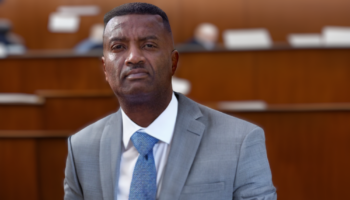 Theodore P. Watson (U.S. Air Force Retired Veteran and Former Federal Procurement Official)
- Experience with DoD, SBA, OIG, FBI, DOJ investigations
- DOJ False Claims Act Civil and Criminal Cases
- SBA criminal defense cases ( FAR and SBA CFRs)
- Buy American Act and Trade Agreements Act
- Handled federal government contractor fraud cases involving False Claims Act, cost accounting fraud, and procurement bid fraud.
- Litigates at the U.S. Court of Federal Claims and U.S. Court of Appeals for the Federal Circuit
Call and Speak Directly to Mr. Watson at 1.866.601.5518.
Cheryl Adams (Associate Attorney – Former Federal Contracting Officer)
 Cheryl Adams is an Associate Attorney with Watson and Associates, LLC. She is a former federal Contracting Officer with years of hands-on experience with all phases of federal procurement. She brings to clients an intimate understanding of the Federal Acquisition Regulation (FAR) and an insider perspective on the procurement processes of a federal government headquarters.
She understands the government’s relationships with small businesses and subcontractors, as well as relationships with Fortune 500 corporations.
She has worked side by side with government auditors, and personally conducted government property audits. She has handled all sizes of contract award from micropurchases through major systems.
She has cradle-to-grave hands-on operational experience with all phases and all types of government contracting processes, from acquisition planning through contract closeout. Read more..
Carolyn L. Oliver – Of Counsel (Former DOJ Prosecutor)
 Of Counsel to Watson & Associates, LLC: Carolyn L. Oliver brings over 40 years of distinguished legal experience to Watson & Associates’ Federal White Collar Defense and Investigations practice. As a former DOJ Prosecutor and Assistant United States Attorney in the Major Frauds Section of the U.S. Attorney’s Office for the Southern District of California, Oliver provides clients with representation from a federal white collar criminal defense attorney who has prosecuted the very types of cases she now defends.
Former federal prosecutorial roles: Her extensive federal prosecution background, combined with her proven track record in complex criminal defense, positions her as a formidable advocate for corporations, CEOs, and individuals facing high-stakes federal investigations.
Experience with DoD, SBA, OIG, FBI, DOJ investigations: As Of Counsel to Watson & Associates’ Federal White Collar Defense and Investigations practice, Oliver focuses her practice on representing companies and individuals in federal criminal and civil investigations and prosecutions by government enforcement agencies, as well as complex federal litigation. She also advises companies on high-profile, complex, and sensitive internal investigations.Read more…
Robert “Bob” Ayers – Of Counsel (Defense Attorney)
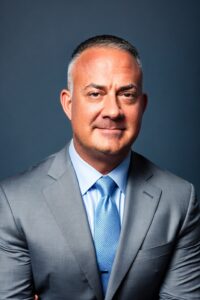
Jennifer Higgins (Former SBA Attorney)
 Of Counsel to Watson & Associates, LLC: Jennifer Higgins brings a wealth of experience in government procurement and small business law to Watson & Associates. As a former SBA lawyer, and senior attorney for the U.S. Small Business Administration (SBA), she offers clients a deep understanding of federal regulations and the inner workings of government agencies. Her background in both federal service and private practice makes her a valuable asset to the firm’s government procurement practice and contractor litigation team.
Wise D. Allen, Esquire – Of Counsel
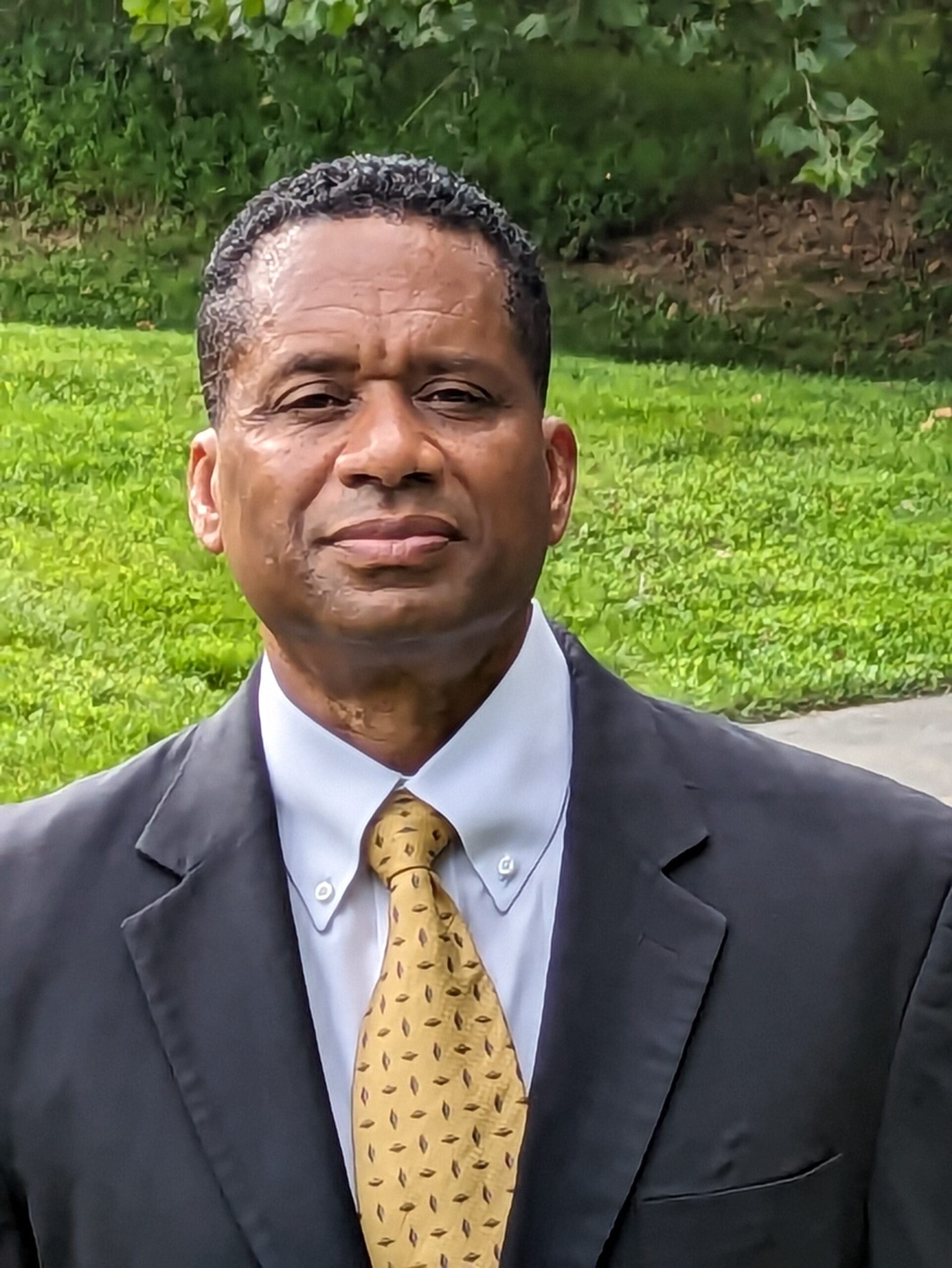 Wise D. Allen, Esquire, Counsel, A former Veteran Lieutenant Commander Judge Advocate for the United States Military, Wise Allen brings extensive knowledge and experience in resolving corporate defense and litigation in vast international and national legal issues.
Mr. Allen’s federal litigation experience as a former appellate attorney representing the United States and a federal white collar criminal defense attorney for defendants in trials that led to his clients receiving overwhelmingly favorable outcomes in contested issues and obtaining non-contested resolutions. Read more..
Questions Contractors and Veteran Owners Ask Us First
Should I talk to the agents who contacted me about SDVOSB fraud? You have the right to decline an interview and to have counsel present. Speak with an SDVOSB fraud lawyer first; an inaccurate statement can create a separate charge.
I’m the veteran owner. Do I need my own lawyer? Often, yes. If you own a veteran-owned business under investigation, your interests may differ sharply from the company’s or a non-veteran partner’s, and those differences should be addressed before anyone gives a statement.
Is a teaming agreement or joint venture with a large business illegal? No. These arrangements are permitted when the SDVOSB keeps control and complies with SBA joint venture rules and the limitations on subcontracting. Problems, and SDVOSB fraud allegations, arise when the paperwork does not match how the work and money actually flowed.
We were certified by SBA VetCert. Does that protect us? It is important evidence of what you disclosed and what SBA approved, but it is not a complete defense. We use it as part of a good-faith record.
Can a civil CID for SDVOSB fraud turn into criminal charges? Yes. DOJ can share civil records with criminal prosecutors, and a civil settlement does not automatically bar criminal charges. Every CID response should be made with criminal exposure in mind.
How much can the government recover? Civil exposure can include treble damages, per-claim penalties of $14,308 to $28,619, and, in willful cases, a presumption of loss equal to the contract value. Criminal penalties under 15 U.S.C. § 645(d) include up to 10 years in prison.
Will we be suspended or debarred? It is possible after an SDVOSB fraud allegation, even if no charges are filed. Suspension and debarment is a separate proceeding focused on present responsibility, and it should be defended from the start.
What is the difference between an SBA eligibility problem and government contract fraud? An eligibility problem means the company did not meet a rule. Government contract fraud requires that someone knowingly made a false claim or statement. Many SDVOSB fraud investigations begin with the first and assume the second; separating the two is often the core of the defense.
Do you only handle SDVOSB matters? No. Many clients first look for a government contractor fraud lawyer or a procurement fraud lawyer after an audit or CID that has nothing to do with set-asides. Our defense contractor fraud representation covers DoD, VA, GSA, and civilian agency matters, including defective pricing, cost mischarging, product substitution, Buy American Act, and cybersecurity certification allegations. Individual officers and employees can also retain a government contractor fraud attorney separate from the company.
Do you handle cases outside Colorado and Washington, D.C.? Yes. Federal procurement fraud is federal law, and we represent government contractors and SDVOSB companies nationwide, coordinating with local counsel where court rules require it.
Speak With Our SDVOSB Fraud Lawyers Today
If you are holding a CID, a subpoena, a target letter, or a status protest — or if agents have already contacted your employees — the most useful next step is a confidential conversation with a government contract fraud lawyer who understands both the SBA rules and the criminal case.
Call 1-866-601-5518. Our lines are answered 24 hours a day, and initial consultations are confidential. You can also contact us here and tell us what you received and when it is due.
Watson & Associates, LLC — Denver, Colorado and Washington, D.C. Representing government contractors, service-disabled veteran-owned small business clients, and veteran-owned business owners nationwide.
This page provides general information about federal law and is not legal advice. It does not create an attorney-client relationship. Prior results do not guarantee a similar outcome.