Defense Government Contractor Fraud Attorney: Criminal and False Claims Act Defense Law Firm for Government Contractors
Watson & Associates, LLC — Washington, D.C. | Nationwide Representation for Large and Small Businesses | Call and speak directly with Mr. Watson: 1-866-601-5518
The Defense Contractor Fraud Lawyers Who Defend You Have Two Ingredients Many Firms Don’t: Hands-on Contracting and Procurement Experience and DOJ Prosecution Experience.
The Call You Were Not Expecting
 Yesterday you were running a company. This morning, agents are in your lobby asking for your contracts administrator, a Civil Investigative Demand is sitting on your desk with a 30-day return date, or a subpoena is naming five years of invoices on a contract you thought closed out cleanly.
Nobody at your company knows what to do next. Your CFO wants to call the contracting officer. Your program manager wants to explain. Your general counsel handles employment matters and commercial leases, not federal procurement fraud. Everyone agrees on one thing: the company cannot afford to lose its contracts.
Here is what we want you to know before you read another word:
You are not required to explain yourself today. Agents from DCIS, the FBI, GSA OIG, SBA OIG, or a Defense Criminal Investigative Service task force are trained to get statements while people are surprised and cooperative. A well-intentioned answer that turns out to be inaccurate is itself a federal crime under 18 U.S.C. § 1001, punishable by up to five years in prison — separate from whatever they came to ask about.
A civil case and a criminal case can be the same case. The Department of Justice frequently runs civil False Claims Act investigations and criminal investigations on parallel tracks, using the same documents and the same witnesses. Treating a CID as a routine document request is how civil exposure becomes an indictment.
The clock is already running. Response deadlines, mandatory disclosure obligations under FAR 3.1003, litigation holds, and the decision about whether to conduct an internal investigation all have to be made in the first days — not after you’ve shopped for counsel for a month.
Watson & Associates, LLC is a Washington, D.C. government contracts law firm that defends contractors, executives, and small business owners in federal procurement fraud investigations and prosecutions nationwide.
Call 1-866-601-5518 for a confidential initial consultation. Contact us here.
What Actually Matters in the First 72 Hours
Most of the damage in a government contractor fraud case is done before a lawyer is hired. Not by the government — by the company.
These are the decisions that shape everything that follows:
Stop the informal conversations. No employee should speak with investigators without counsel present. That includes your contracting officer, your COR, and the agency’s suspension and debarment official. It also includes the well-meaning email that “clarifies” a prior submission.
Issue a litigation hold immediately. Automatic email deletion policies, document retention schedules, and routine purges of program files become obstruction problems the moment you are on notice. This is one of the few areas where a company can convert a defensible case into an indefensible one in a single afternoon.
Identify whose lawyer is whose. Company counsel represents the company. If an executive or program manager has individual exposure, the conflict has to be identified and separate counsel arranged early. The government will look at who was represented by whom, and when.
Read the CID carefully — including what it does not say. A Civil Investigative Demand issued under 31 U.S.C. § 3733 usually means a qui tam complaint has been filed under seal and the government is deciding whether to intervene. The scope of the demand tells you a great deal about the theory, the relator, and the time period at issue.
Do not assume your contracting officer can fix this. Once an OIG or DOJ file is open, the contracting officer has no authority to make it go away, and conversations with the CO become evidence.
If you are in that first window right now, stop reading and call. 1-866-601-5518.
Why a Government Contractor Criminal Defense Attorney Is Not the Same as a White-Collar Lawyer
Search for a defense contractor fraud attorney and you will find two kinds of firms.
The first — and it is most of the first page of Google — are whistleblower firms. They are excellent at what they do, and what they do is represent the relator who filed the qui tam case against you. Read their pages carefully and you will see the audience is the person reporting your company, not the company defending itself.
The second are federal criminal defense firms. They know the courtroom. What many of them do not know is the Federal Acquisition Regulation, how an incurred cost submission is built, how a CAS-covered indirect rate structure works, what a technically acceptable proposal looks like, or why a U.S. Trade Agreements Act, Act certification on a GSA Schedule item is a question of country of origin rather than intent.
That gap is where cases are won or lost. A False Claims Act theory usually rests on a proposition about the contract — that a certification was false, that a cost was unallowable, that a delivered item did not conform, that a small business was not eligible. Answering that proposition requires someone who can read the solicitation, the clauses, the modifications, the DCAA workpapers, and the correspondence file, and explain to a prosecutor why the government’s reading of them is wrong.
The people on our side of the table
Theodore P. Watson, our national lead, spent more than two decades in federal procurement, including service as a Department of Defense procurement official, before practicing law. He is licensed before the U.S. Supreme Court and has defended contractors in federal criminal and civil fraud matters across the country. When a prosecutor asserts what a contractor “must have known” about a FAR requirement, Mr. Watson has actually administered that requirement from inside the government.
Cheryl Adams is a former federal Contracting Officer. She has awarded contracts, run competitions, handled audits, and issued the very documents that the government now says were falsified. In a mischarging or certification case, a former CO’s read of the file is frequently the difference between a theory that survives and one that does not.
That combination — procurement officials who built the contracts and prosecutors who tried the cases — is what most defense contractor fraud law firms cannot assemble. It is the reason clients call us before they call a general criminal firm.
Speak directly with Mr. Watson: 1-866-601-5518.
Meet Our National Defense Contractor Fraud Law Firm Team Leads
 Theodore P. Watson (U.S. Air Force Retired Veteran and Former Federal Procurement Official)
- Experience with DoD, SBA, OIG, FBI, DOJ investigations
- DOJ False Claims Act Civil and Criminal Cases
- SBA criminal defense cases ( FAR and SBA CFRs)
- Buy American Act and Trade Agreements Act
- Handled federal government contractor fraud cases involving False Claims Act, cost accounting fraud, and procurement bid fraud.
- Litigates at the U.S. Court of Federal Claims and U.S. Court of Appeals for the Federal Circuit
Call and Speak Directly to Mr. Watson at 1.866.601.5518.
Cheryl Adams (Associate Attorney – Former Federal Contracting Officer)
 Cheryl Adams is an Associate Attorney with Watson and Associates, LLC. She is a former federal Contracting Officer with years of hands-on experience with all phases of federal procurement. She brings to clients an intimate understanding of the Federal Acquisition Regulation (FAR) and an insider perspective on the procurement processes of a federal government headquarters.
She understands the government’s relationships with small businesses and subcontractors, as well as relationships with Fortune 500 corporations.
She has worked side by side with government auditors, and personally conducted government property audits. She has handled all sizes of contract award from micropurchases through major systems.
She has cradle-to-grave hands-on operational experience with all phases and all types of government contracting processes, from acquisition planning through contract closeout. Read more..
Carolyn L. Oliver – Of Counsel (Former DOJ Prosecutor)
 Of Counsel to Watson & Associates, LLC: Carolyn L. Oliver brings over 40 years of distinguished legal experience to Watson & Associates’ Federal White Collar Defense and Investigations practice. As a former DOJ Prosecutor and Assistant United States Attorney in the Major Frauds Section of the U.S. Attorney’s Office for the Southern District of California, Oliver provides clients with representation from a federal white collar criminal defense attorney who has prosecuted the very types of cases she now defends.
Former federal prosecutorial roles: Her extensive federal prosecution background, combined with her proven track record in complex criminal defense, positions her as a formidable advocate for corporations, CEOs, and individuals facing high-stakes federal investigations.
Experience with DoD, SBA, OIG, FBI, DOJ investigations: As Of Counsel to Watson & Associates’ Federal White Collar Defense and Investigations practice, Oliver focuses her practice on representing companies and individuals in federal criminal and civil investigations and prosecutions by government enforcement agencies, as well as complex federal litigation. She also advises companies on high-profile, complex, and sensitive internal investigations.Read more…
Robert “Bob” Ayers – Of Counsel (Defense Attorney)
 With over 20 years of experience in high-stakes federal cases,Bob Ayers (Corporate Defense Counsel)has represented corporate executives, public officials, and in-house counsel in matters involving fraud, bribery, obstruction of justice, and other financial and regulatory offenses.
Jennifer Higgins (Former SBA Attorney)
 Of Counsel to Watson & Associates, LLC: Jennifer Higgins brings a wealth of experience in government procurement and small business law to Watson & Associates. As a former SBA lawyer, and senior attorney for the U.S. Small Business Administration (SBA), she offers clients a deep understanding of federal regulations and the inner workings of government agencies.
Wise D. Allen, Esquire – Of Counsel
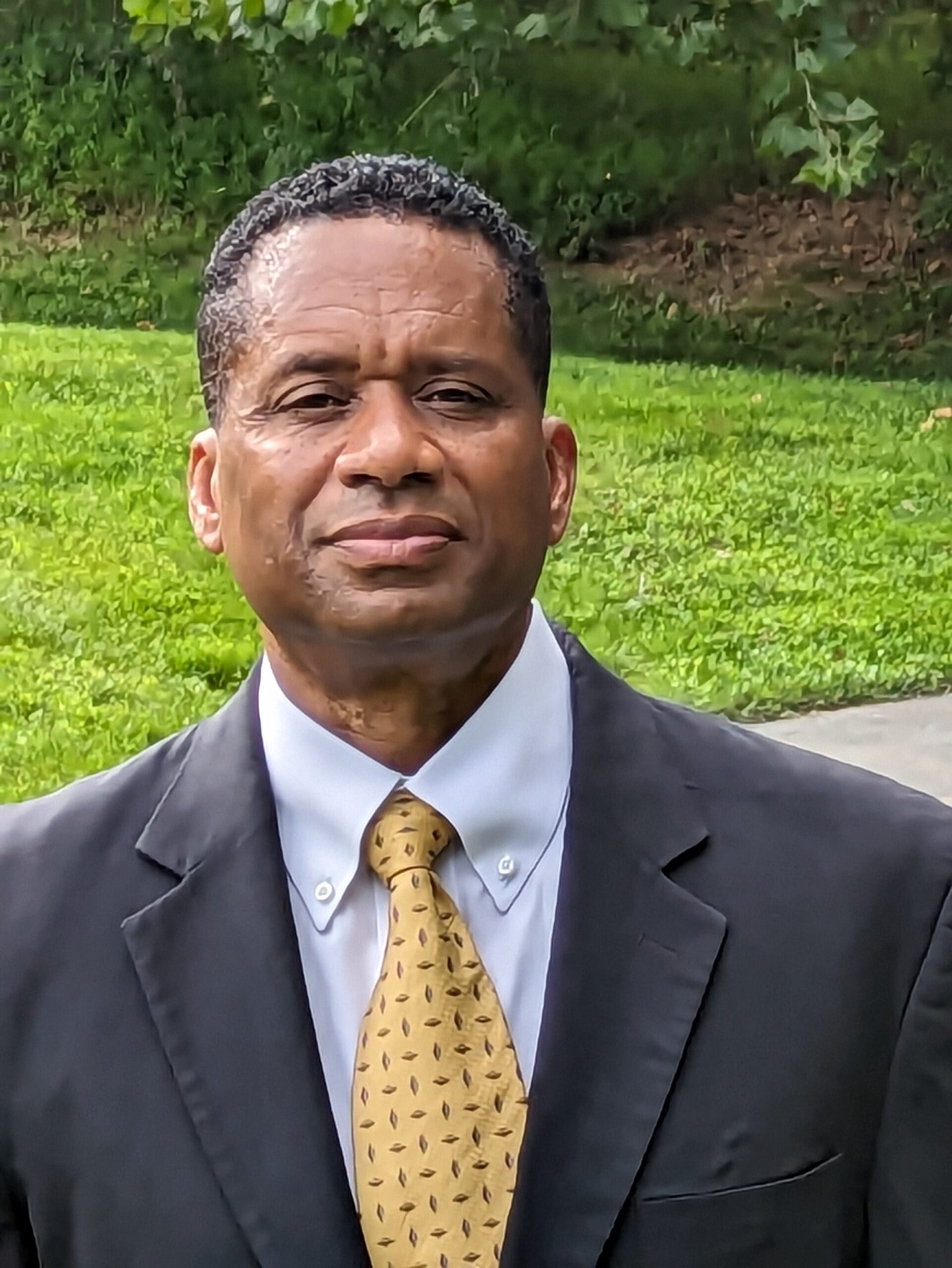 Wise D. Allen, Esquire, Counsel, A former Veteran Lieutenant Commander Judge Advocate for the United States Military, Wise Allen brings extensive knowledge and experience in resolving corporate defense and litigation in vast international and national legal issues.
Mr. Allen’s federal litigation experience as a former appellate attorney representing the United States and a federal white collar criminal defense attorney for defendants in trials that led to his clients receiving overwhelmingly favorable outcomes in contested issues and obtaining non-contested resolutions. Read more..
The False Claims Act: How One Set of Facts Becomes Two Cases
The False Claims Act, 31 U.S.C. §§ 3729–3733, is the government’s primary civil fraud statute, and it is the reason a billing dispute can escalate into an existential problem for a contractor.
Civil False Claims Act liability
Civil liability attaches when a person knowingly presents a false or fraudulent claim for payment, knowingly uses a false record or statement material to a false claim, or knowingly conceals or improperly avoids an obligation to pay the government.
The word doing the most work is knowingly. Under 31 U.S.C. § 3729(b)(1), “knowing” and “knowingly” mean actual knowledge, deliberate ignorance of the truth or falsity of the information, or reckless disregard of the truth or falsity of the information — and the statute expressly requires no proof of specific intent to defraud.
Read that again, because it is the single most misunderstood sentence in government contracting. The government does not have to prove you meant to cheat. It has to prove you were reckless. A rate structure nobody reviewed for three years, a certification signed by someone who never checked, a subcontractor’s country-of-origin representation taken at face value — these are the fact patterns that produce FCA liability without anyone at the company ever intending to defraud anyone.
Common civil FCA theories against government contractors
- Billing and mischarging — labor hours charged to the wrong contract, direct costs booked as indirect, unallowable costs in the indirect pool
- Cross-charging — moving costs from a fixed-price contract to a cost-reimbursement contract
- Defective pricing — failure to submit or disclose accurate, complete, and current cost or pricing data under the Truthful Cost or Pricing Data statute (TINA)
- Product substitution and nonconforming goods — including Buy American Act and Trade Agreements Act country-of-origin issues
- Quality assurance and testing fraud — certifying test results that were not performed as specified
- Small business and set-aside eligibility fraud — 8(a), SDVOSB, WOSB, and HUBZone status, affiliation, and pass-through allegations
- Cybersecurity representations — DFARS 252.204-7012 and NIST SP 800-171 compliance certifications, a stated DOJ enforcement priority
- Customs and tariff evasion — misdeclared origin or valuation, now the subject of a DOJ cross-agency Trade Fraud Task Force
When the civil case becomes a criminal case
There is no wall between the two. DOJ’s Civil and Criminal Divisions coordinate, and the same conduct supports both. The criminal statutes that most often appear in government contractor fraud prosecutions:
| Statute | Conduct | Maximum imprisonment |
|---|---|---|
| 18 U.S.C. § 287 | Presenting a false, fictitious, or fraudulent claim to a federal agency | 5 years |
| 18 U.S.C. § 1001 | Materially false statements, concealment, or false writings in a federal matter | 5 years (8 in specified cases) |
| 18 U.S.C. § 371 | Conspiracy to defraud the United States | 5 years |
| 18 U.S.C. § 1031 | Major fraud against the United States, where the contract, subcontract, or federal assistance is valued at $1,000,000 or more | 10 years |
| 18 U.S.C. §§ 1341, 1343 | Mail fraud and wire fraud | 20 years |
Section 1031 deserves particular attention from executives at mid-size and large contractors. It applies to any scheme involving a contract or subcontract of $1,000,000 or more, carries fines up to $1,000,000 — rising to $5,000,000 where the gross loss or gain is $500,000 or more — with an aggregate cap of $10,000,000 across multiple counts, and it has a seven-year statute of limitations rather than the usual five.
Under 31 U.S.C. § 3731(e), a criminal fraud conviction also bars the defendant from denying the essential elements of the offense in the parallel civil FCA action. Losing the criminal case effectively decides the civil one.
If you are facing both tracks, call a procurement fraud lawyer who handles both: 1-866-601-5518.
Federal False Claims Act Penalties: What Your Exposure Actually Is in 2026
Most pages on this subject still quote the statutory text: “not less than $5,000 and not more than $10,000.” That number has been wrong since 1999. The Department of Justice adjusts it for inflation under 28 C.F.R. § 85.5, and the current figures are far higher.
The current per-claim penalty range
| Component | Current amount |
|---|---|
| Minimum civil penalty per false claim | $14,308 |
| Maximum civil penalty per false claim | $28,619 |
| Damages multiplier | Three times the government’s damages |
| Reduced damages (if statutory conditions met) | Not less than two times damages |
These amounts took effect July 3, 2025 and apply to penalties assessed after that date for violations occurring after November 2, 2015. On July 15, 2026, DOJ announced that it was not making an inflation adjustment for 2026 — an October–November 2025 appropriations lapse prevented the Bureau of Labor Statistics from producing the CPI-U data the calculation requires, and OMB Memorandum M-26-11 directed agencies to keep using 2025 levels. So the 2025 figures remain the operative numbers today.
Why “per claim” is the number that should worry you
The penalty is assessed per false claim, not per contract and not per investigation. In a contractor case, a “claim” is typically an invoice, a voucher, or a progress payment request.
Do the arithmetic on your own billing cycle. A contractor submitting monthly invoices on a five-year contract has submitted roughly 60 claims. At the minimum penalty, that is approximately $858,000 in penalties before a dollar of damages is calculated — and treble damages are then added on top. In service contracts billed weekly, or in health care and supply contracts where each line item is a claim, the multiplication becomes ruinous quickly. This is why penalty exposure in FCA cases routinely exceeds the government’s actual loss by an order of magnitude, and why the constitutional excessiveness of aggregate penalties is a live defense issue.
The 30-day window most contractors miss
Under 31 U.S.C. § 3729(a)(2), a court must assess not less than double damages instead of treble damages if the person:
- furnished officials responsible for investigating false claims violations with all information known about the violation within 30 days after the date on which the defendant first obtained the information;
- fully cooperated with any government investigation of the violation; and
- at the time of disclosure, no criminal prosecution, civil action, or administrative action had commenced, and the person did not have actual knowledge of the existence of an investigation.
That window closes fast, and it closes permanently once an investigation is underway. The decision whether to make a voluntary disclosure — and it is genuinely a decision, with serious risks in both directions — is one of the most consequential calls a contractor makes, and it should never be made without counsel who has handled both sides of it.
How long the government has to sue you
Under 31 U.S.C. § 3731(b), a civil FCA action must be brought within six years of the violation, or within three years after the date material facts were known or reasonably should have been known by the responsible U.S. official — but in no event more than ten years after the violation. Whichever occurs last controls.
Practically: conduct from 2017 can still be actionable today. Closed-out contracts are not safe harbors.
If the allegation involves small business status
Under 13 C.F.R. § 121.108, there is a presumption of loss to the United States equal to the total amount expended on the contract when a concern willfully misrepresents its size status to obtain a small business set-aside award. Not the profit. Not the overcharge. The entire contract value — which is then subject to treble damages and per-claim penalties.
The same regulation makes submitting an offer on a set-aside, self-certifying in a federal database like SAM, or otherwise representing small business status a deemed certification, and identifies the penalties: suspension and debarment under FAR subpart 9.4, civil liability under the False Claims Act, the Program Fraud Civil Remedies Act, and criminal liability under 15 U.S.C. § 645(d), 18 U.S.C. § 1001, and 18 U.S.C. § 287.
If your company is under investigation over 8(a), SDVOSB, WOSB, HUBZone, or affiliation issues, you need a federal small business fraud defense lawyer who understands SBA program regulations and the criminal exposure at the same time. See our SDVOSB fraud defense and SBA size protest practices.
The Consequence That Closes Companies Faster Than a Fine
Executives fixate on penalties and prison. What actually ends government contracting businesses is exclusion.
Suspension can be imposed on adequate evidence, before any charge or finding, and it stops new awards immediately. Under FAR 9.407-4 it lasts up to 12 months, extendable by 6 months if legal proceedings are initiated — 18 months during which your pipeline is frozen.
Debarment under FAR 9.406-4 is generally not to exceed three years, but three years without federal awards is terminal for most contractors, and the SAM exclusion record follows the company and its principals into every teaming conversation for years afterward.
FAR 9.406-2(a) makes commission of fraud or a criminal offense in connection with obtaining, attempting to obtain, or performing a public contract a cause for debarment. FAR 9.406-2(b)(1)(vi) makes a principal’s knowing failure to timely disclose credible evidence of a Title 18 violation involving fraud, conflict of interest, bribery, or gratuities, a civil False Claims Act violation, or a significant overpayment, an independent cause for debarment — and under FAR 3.1003(a)(2) that obligation runs until three years after final payment on the contract, whether or not the clause at FAR 52.203-13 appears in your contract.
This matters strategically. Suspension and debarment officials operate on their own timeline, in a separate forum, with a different standard of proof. Waiting for the criminal case to resolve before engaging the SDO is a mistake. Present-responsibility advocacy — governance changes, compliance program remediation, personnel action, an administrative agreement — often has to run in parallel with the criminal and civil defense, and each track constrains what you can say in the others.
A criminal defense firm without a government contracts practice cannot run all three. A government contracts firm without criminal defense capability cannot either.
How Our Defense Contractor Fraud Law Firm Approaches a Government Contractor Fraud Investigation
We do not run a template. But every matter passes through the same sequence, and it starts before the government hears from Watson’s defense contractor fraud law firm.
1. Contain. Litigation hold, employee communications protocol, single point of contact for investigators, conflict screening for individuals with separate exposure, and a clear instruction that no one speaks to the government without counsel.
2. Learn the case before the government tells us. We reconstruct the contract file, the pricing and cost record, the certifications actually made, the modifications, and the correspondence — under privilege — so we understand our own facts before responding to anything. In most cases the government’s theory has a factual weak point that only shows up in the procurement record.
3. Answer the demand precisely. CID and subpoena responses are negotiated, not simply complied with. Scope, custodians, date ranges, privilege, and format are all subject to discussion, and how a response is framed communicates a great deal about the strength of your position.
4. Engage the decision-makers directly. For civil matters, that is the AUSA and DOJ Civil Fraud Section attorneys deciding whether to intervene. For criminal matters, it is the prosecutor deciding whether to charge. Presentations at this stage — before charging, before intervention — resolve more contractor cases than motions do.
5. Protect eligibility in parallel. Suspension and debarment, contract terminations, past performance evaluations, and agency-level actions are handled at the same time, not afterward.
6. Litigate when litigation is the right answer. Rule 9(b) particularity, materiality under Universal Health Services v. Escobar, the government-knowledge defense, falsity where the underlying requirement is genuinely ambiguous, and constitutional challenges to disproportionate penalty aggregation.
Federal Small Business Fraud: Set-Aside and SBA Program Investigations
Small business program cases are their own category. The allegations tend to be about control, affiliation, and eligibility rather than billing, and they are investigated by SBA OIG, frequently alongside agency OIGs and DOJ.
We defend contractors facing:
- 8(a) Business Development program eligibility and control allegations
- SDVOSB and VOSB service-disabled veteran control and ownership investigations
- WOSB and EDWOSB certification and control allegations
- HUBZone principal office and employee residency issues
- Affiliation and ostensible subcontractor rule allegations
- The nonmanufacturer rule and pass-through allegations
- Joint venture and mentor-protégé compliance
- PPP and pandemic program fraud referrals involving contractors
Jennifer Higgins is a former Senior Attorney with the U.S. Small Business Administration. She has worked inside the agency that writes and enforces the 8(a), SDVOSB, WOSB, and HUBZone rules, and she brings that perspective to size protests, eligibility investigations, and the criminal referrals that sometimes follow them. Very few firms defending federal small business fraud allegations have a former SBA attorney reading the file.
Wise D. Allen, a former Lieutenant Commander Judge Advocate, adds military and international contracting experience and a federal appellate background for matters that reach that stage.
Questions Government Contractor Executives Ask Us First
Should I respond to a Civil Investigative Demand myself?
No. A CID is a compulsory process issued under 31 U.S.C. § 3733 in an investigation of False Claims Act liability, and in most cases it signals that a qui tam complaint is under seal. Everything you produce is available for use in a criminal investigation. Scope and timing are negotiable with DOJ, but only through counsel, and an incomplete or overbroad production creates problems that are difficult to undo. See our guide on how to respond to Civil Investigative Demands.
Can I be criminally charged if the government has only filed a civil False Claims Act case?
Yes. Civil and criminal investigations run in parallel and share information. A civil settlement does not foreclose criminal charges, and statements or productions made in the civil matter can be used criminally. If there is any realistic criminal exposure, the civil case has to be defended with that in mind from day one.
Does the government have to prove I intended to defraud anyone?
Not for civil False Claims Act liability. Section 3729(b)(1) defines “knowingly” to include deliberate ignorance and reckless disregard, and expressly states that no proof of specific intent to defraud is required. Criminal charges require a higher mental state, which is precisely why the line between the two tracks is worth fighting over early.
Are we required to self-report under the FAR mandatory disclosure rule?
Under FAR 3.1003(a)(2), a principal’s knowing failure to timely disclose credible evidence of a Title 18 violation involving fraud, conflict of interest, bribery, or gratuities, or of a civil False Claims Act violation, is a cause for suspension and debarment until three years after final payment. But “credible evidence” is a real standard, not a hair trigger, and it presumes you have done enough factual work to know what you have. The sequence matters: investigate under privilege first, then decide. Disclosing prematurely, or disclosing the wrong thing, can create the case against you.
How far back can the government go?
Six years from the violation, or three years from when the responsible government official knew or should have known the material facts, capped at ten years — whichever is later, under 31 U.S.C. § 3731(b). Criminal charges under 18 U.S.C. § 1031 carry a seven-year limitations period. Contract closeout does not end exposure.
Will my company be suspended or debarred while this is pending?
It is possible, and it is a separate proceeding from the criminal or civil case. Suspension requires only adequate evidence and can be imposed before any charge. The realistic goal is to engage the suspension and debarment official early with a present-responsibility showing — remediation, governance, compliance, and personnel measures — rather than waiting for the case to resolve.
Can our company lawyer represent me personally too?
Often not. Corporate counsel represents the entity, and the entity’s interests and an individual executive’s interests can diverge sharply — particularly if the company later cooperates. Sorting out representation and Upjohn warnings early protects everyone. We routinely coordinate with separate individual counsel in multi-defendant matters.
An employee filed a qui tam case. What does that change?
The relator’s complaint is sealed while the government investigates and decides whether to intervene. That sealed period is when a contractor has the most influence on what happens next: a well-supported presentation to the government during its investigation shapes intervention decisions, and that opportunity is not available once the complaint is unsealed. It also raises immediate employment law questions, because the FCA’s anti-retaliation provision at 31 U.S.C. § 3730(h) makes adverse action against the relator its own liability. See our qui tam and False Claims Act defense page.
Should we run an internal investigation?
Usually yes — but structured so the work product is privileged, scoped to the actual allegation rather than everything, and directed by outside counsel. An unstructured internal review conducted by management frequently produces documents the government later reads, and interviews conducted without proper warnings create their own problems.
How much of this is really about the money?
Less than executives expect. A contractor can often survive the financial exposure. What it usually cannot survive is exclusion from federal contracting, loss of facility clearances, or an individual conviction of a principal. Defense strategy should be built around eligibility and liberty, with the dollars as a third priority.
Who We Defend
Watson & Associates, LLC represents prime contractors, subcontractors, executives, and small business owners across the federal marketplace:
- Defense and aerospace contractors, DoD suppliers, and DCIS targets
- Construction and infrastructure contractors on federal and federally funded projects
- IT, cybersecurity, and professional services contractors
- Logistics, supply, and product manufacturers, including Buy American Act and Trade Agreements Act compliance matters
- GSA Schedule contractors
- Health care contractors and providers billing federal programs
- 8(a), SDVOSB, WOSB, and HUBZone participants
- Grant recipients and federally funded research organizations
Agencies and investigative bodies we appear against include DOJ Civil Fraud Section and U.S. Attorney’s Offices, DCIS, FBI, GSA OIG, SBA OIG, VA OIG, HHS OIG, DCAA, and agency suspension and debarment officials.
Why This Is a National Enforcement Problem, Not a Local One
The Justice Department reported on January 16, 2026 that False Claims Act settlements and judgments exceeded $6.8 billion in fiscal year 2025 — the highest single-year total on record. More than $5.3 billion came from qui tam suits brought by whistleblowers. Relators filed 1,297 qui tam suits in FY2025, shattering the prior record of 980 set the year before, and the government opened 401 of its own new investigations.
DOJ identified government procurement, loan, and grant programs, contractor cybersecurity representations, tariff and customs duty evasion, and pandemic program fraud as continuing priorities, and announced a cross-agency Trade Fraud Task Force.
The practical translation for a contractor: the volume of whistleblower filings is rising sharply, and the filer is usually an employee, a former employee, a competitor, or a teaming partner. Most contractors learn about the case not when it is filed, but months later when the CID arrives.
A Washington, D.C. Government Contracts Law Firm That Defends Contractors Nationwide
Our Washington, D.C. presence is not a mailing address. It is where DOJ Civil Fraud, agency suspension and debarment officials, agency Offices of Inspector General, the Civilian Board of Contract Appeals, the Armed Services Board of Contract Appeals, the Court of Federal Claims, and the Federal Circuit all sit. Proximity to the decision-makers who resolve contractor fraud matters is a practical advantage, not a marketing line.
As a DC government contracts law firm with a second full office in Denver, Colorado, we represent contractors in federal district courts and before federal agencies nationwide. A Washington government contractor fraud lawyer from our firm can be engaged whether your company is headquartered in Virginia, Texas, California, Florida, or anywhere else — federal procurement fraud is federal law, applied the same way in every district.
For contractors searching for a government contract fraud attorney in Washington, D.C. who can handle the criminal exposure, the False Claims Act exposure, and the contract and eligibility consequences with one team, that is the practice we have built.
Related practice areas: federal criminal defense for contractors · False Claims Act defense · government contractor defense · health care fraud defense · contract terminations · bid protests
Talk to a Defense Government Contractor Fraud Attorney Today
If federal agents have contacted your company, if a Civil Investigative Demand or grand jury subpoena has arrived, if a qui tam complaint has been unsealed, or if your own internal review has surfaced something you do not know what to do with — the useful next step is a confidential conversation with counsel who has handled this specific problem.
There is no obligation, and the consultation is initial and confidential.
Call and speak directly with Defense Contractor Fraud Attorney Mr. Watson: 1-866-601-5518
24 hours a day. Offices in Washington, D.C. and Denver, Colorado. Nationwide representation.
Request a confidential consultation →
This page is provided for general information about federal government contractor fraud investigations and defense. It is not legal advice, and reading it does not create an attorney-client relationship. Every matter turns on its own facts and applicable law. Prior results do not guarantee or predict a similar outcome in any future matter. Statutory citations, regulatory provisions, and penalty amounts are current as of the date of publication and are subject to change.